Introduction
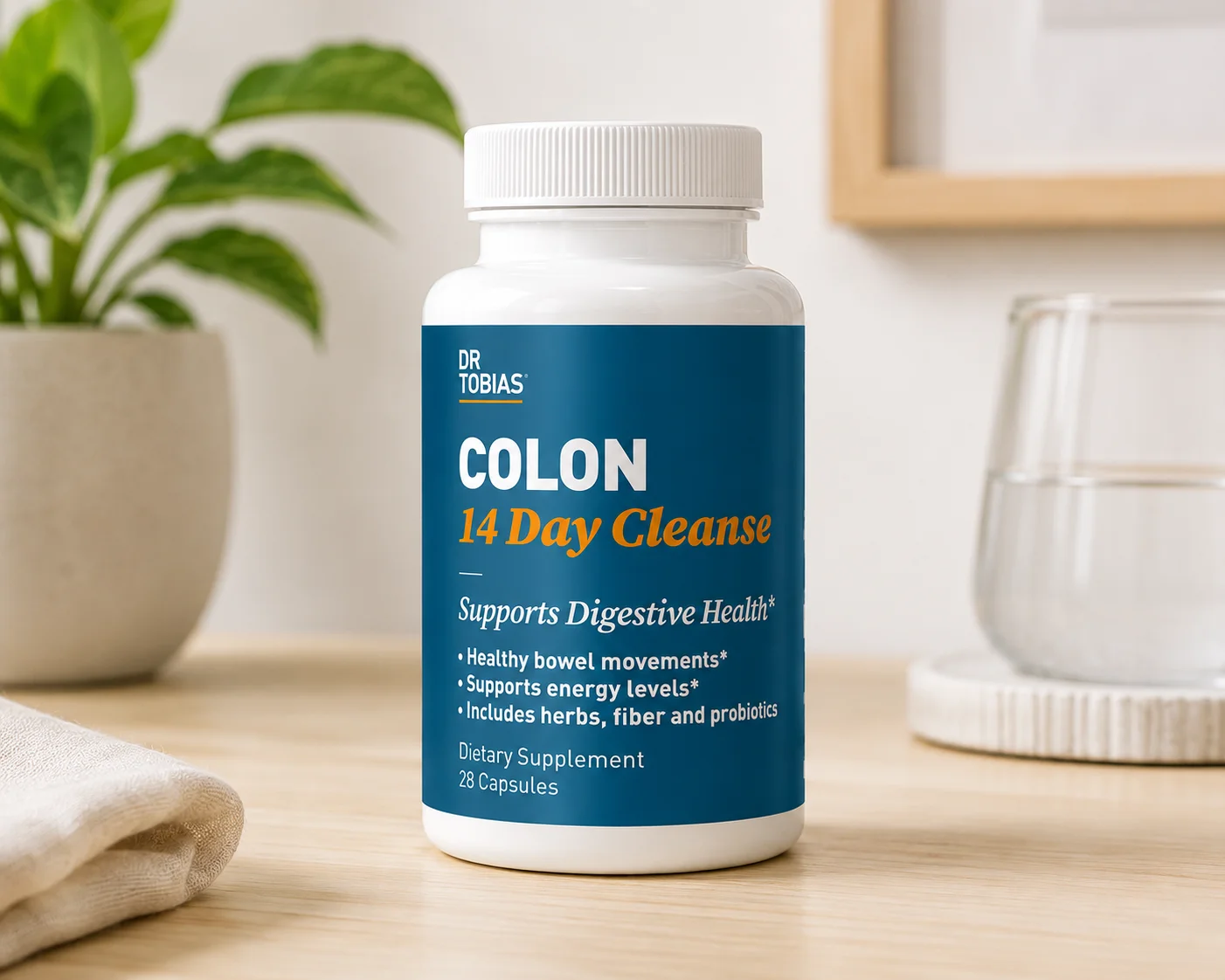
Dr. Tobias Colon 14 Day Cleanse is one of the best-selling colon cleanse products on Amazon, built around senna leaf, cascara sagrada, psyllium husk, and a probiotic strain. Health Findings Lab audited the actual Supplement Facts label — not just the marketing copy — against our 6-step review process and 5-pillar scoring system. You can review current pricing and guarantee terms directly through our tracked link: check current price of Dr. Tobias Colon 14 Day Cleanse.
The headline finding of this audit: unlike most competitors in this category, Dr. Tobias discloses the exact milligram dose of every ingredient. That's a genuine transparency win. But full transparency also means we can now calculate exactly how those doses compare to the clinical research behind each ingredient — and that comparison is where the formula's real strengths and weaknesses show up.
What Is Dr. Tobias Colon 14 Day Cleanse & How Does It Work?
This is a 28-capsule program built around a specific 14-day structure, not 14 straight days of capsules. Per the label's Suggested Use: take 1-2 capsules at bedtime with 8 ounces of water for up to 7 days (starting with 1 capsule for your first 4 days if it's your first time), then on days 8 through 14, stop the capsules and instead focus on additional dietary fiber and water intake. The label explicitly instructs not to repeat the cleansing program for at least 6 to 8 weeks. Buyers expecting to take capsules every day for two full weeks should know that's not how the product is designed to be used.
Mechanically, the formula combines stimulant laxative herbs (senna leaf, cascara sagrada) that trigger colon contractions, a bulk-forming fiber (psyllium husk, flaxseed) that adds volume and draws water into the stool, a soothing demulcent (aloe vera), a probiotic strain, and licorice root.
User Experience & Real Feedback
Across tens of thousands of Amazon and Walmart reviews, the consensus is fairly consistent: most users report a noticeable bowel-clearing effect within 12-24 hours of the first dose, and describe the program as effective for a short-term reset. The most common complaints are intensity-related — cramping, urgency, and bloating, which the manufacturer itself flags as a possible side effect — plus a subset of users who report no meaningful change. Reviewers who found it too aggressive were generally advised, correctly per the label, to start with the reduced 1-capsule dose for the first four days.
Ingredients Analysis (Backed by Science)
Here is the full label, ingredient by ingredient, per two-capsule serving:
- Senna Leaf (20% extract) — 285 mg
- Cascara Sagrada Bark (10% extract) — 300 mg
- Psyllium Husk Powder — 300 mg
- Flaxseed Powder — 100 mg
- Aloe Vera Gel (200:1 concentrate) — 80 mg
- Lactobacillus acidophilus — 50 mg
- Licorice Root (10% extract) — 50 mg
- Medium Chain Triglycerides (MCT) Oil — 14 mg
Because every dose is disclosed, we can now audit potency directly against the clinical literature, rather than flagging a hidden blend as we would for most competitors.
- Senna leaf (285 mg, 20% extract): Senna is a stimulant laxative with real clinical support for short-term constipation relief, including in systematic reviews of long-term care populations where it performed as well as or better than comparator laxatives. At a 20% extract concentration, this dose delivers a meaningful, non-trivial amount of active senna compounds — consistent with an effective short-term dose, not a marketing-trace amount. That said, NIH's LiverTox database notes senna can cause liver injury when used in high doses for longer than the recommended period, which is exactly why the label caps continuous use at 7 days.
- Cascara sagrada (300 mg, 10% extract): This remains the formula's weakest link from a regulatory standpoint, independent of dose. The FDA issued a final rule in 2002 declaring cascara sagrada not generally recognized as safe and effective (GRASE) for OTC laxative drug use, removing it from the regulated drug category entirely. NIH's LiverTox entry also documents rare but serious cases of cascara-associated liver injury with prolonged use. A disclosed dose doesn't resolve this regulatory concern — it just means buyers can now see exactly how much of it they're taking.
- Psyllium husk (300 mg): This is where full disclosure actually hurts the formula's score. A 2022 systematic review and meta-analysis of 16 randomized controlled trials found fiber supplementation meaningfully improves stool frequency and consistency in chronic constipation specifically at doses above 10,000 mg (10g) per day, sustained for at least 4 weeks. This product's 300 mg dose is roughly 3% of that studied threshold. In practice, the psyllium here is very unlikely to be doing meaningful independent work — the bowel-clearing effect users report is almost certainly driven by the senna and cascara sagrada, not the fiber.
- Flaxseed (100 mg), aloe vera (80 mg), Lactobacillus acidophilus (50 mg), licorice root (50 mg), MCT oil (14 mg): These are supportive, adjunct-level doses. None are dosed at a level associated with a standalone clinical effect in the literature; they function as minor additions to the core stimulant-laxative mechanism rather than independently active ingredients.
Formula Audit Verdict: This is a genuinely transparent label — a real point in its favor under our methodology. But transparency simply relocates the question from "what's in this?" to "is what's in this dosed to work?" On that front, the formula is a stimulant-laxative product first (senna and cascara sagrada, both dosed meaningfully) with a fiber and probiotic profile that's present mostly for label appeal rather than clinical effect.
Manufacturing & Quality Signals
Dr. Tobias states the product is made in a facility that follows GMP (Good Manufacturing Practice) guidelines in the USA and is "third-party tested for product purity, effectiveness, ingredient safety, nutritional value and label accuracy." This is a positive baseline signal, but it remains a manufacturer claim rather than an independently published certification — there is no NSF, USP, or ConsumerLab seal published for this specific SKU at the time of this audit. Worth noting for readers with allergies: the facility also processes milk, soy, wheat, egg, peanuts, tree nuts, fish, and crustacean shellfish, per the label's cross-contact disclosure.
Scientific Support & Benefits
- May support short-term relief of occasional constipation, driven primarily by the senna and cascara sagrada content
- May help promote a temporary reduction in bloating associated with irregular bowel movements
- May support regular bowel elimination during the active 7-day capsule phase
- Structured 14-day cycle (7 days active, 7 days fiber-and-water follow-through) is a more measured approach than continuous stimulant laxative use
Safety & Possible Side Effects
The manufacturer's own caution label is explicit and worth quoting directly rather than softening: bloating and cramping are disclosed possible side effects. The product should not be used by anyone with difficulty swallowing (it must be taken with a full glass of liquid to avoid choking risk), and is not intended for pregnant or nursing individuals or anyone under 18. The label also warns against use if you have abdominal pain, diarrhea, or loose stools, and flags that rectal bleeding, abdominal cramping, or failure to have a bowel movement after use may indicate a condition requiring medical attention. Anyone with a known medical condition or on medication should consult a physician before use, consistent with the liver-injury signal associated with senna and cascara sagrada noted above.
Who Should Consider / Who Should Avoid
Consider it if: you want an occasional, short-term bowel reset with a fully transparent label, you're comfortable with the actual 7-day active-capsule structure (not 14 continuous days), and you have no history of liver issues, IBD, or difficulty swallowing capsules.
Avoid it if: you have chronic constipation requiring a long-term fiber-based strategy (300mg of psyllium won't meaningfully address this), any liver condition, are pregnant or nursing, need a vegetarian/vegan capsule (this one uses bovine gelatin), or have a severe allergy to milk, soy, wheat, egg, peanuts, tree nuts, fish, or shellfish given the shared-facility disclosure.
Alternatives & Comparisons (The Editorial Verdict)
For readers who specifically want the fiber-driven, long-term regularity benefit that clinical research supports, a standalone psyllium husk supplement dosed at or near the 10g/day threshold shown effective in the research above will outperform this product on that specific mechanism — because at 300mg, psyllium here is a label ingredient, not a functional dose. For readers who want the short-term stimulant-laxative effect this product is actually built around, Dr. Tobias's fully disclosed senna and cascara sagrada doses are a genuine point in its favor over competitors that hide the same ingredients inside a proprietary blend.
Pricing & Money-Back Guarantee
At the time of writing, a single 28-capsule bottle (one 14-day cycle) is priced at approximately $19.99 on the official site and major retailers, which is competitive for this category. You can confirm the current price and any active promotions here: view current Dr. Tobias Colon 14 Day Cleanse pricing. Dr. Tobias offers a standard satisfaction guarantee through its official retail channels; we recommend purchasing through the manufacturer's official storefront rather than third-party marketplace resellers to ensure the guarantee is honored and the product hasn't been altered.
Frequently Asked Questions
Do I take capsules for all 14 days?
No. The label specifies up to 7 continuous days of capsules (1-2 per night), followed by 7 days of increased fiber and water intake without capsules. The product name refers to the full 14-day cycle, not 14 days of active dosing.
Is Dr. Tobias Colon 14 Day Cleanse safe to use every month?
The label advises against repeating the cleanse for at least 6 to 8 weeks. Given the senna and cascara sagrada content, we would not recommend using it as a monthly routine without discussing it with a healthcare provider first.
Is the psyllium husk dose enough to relieve constipation on its own?
Unlikely. Clinical research on psyllium for constipation generally uses doses of 10g or more per day; this product's 300mg dose is a small fraction of that. Any bowel-clearing effect is most likely driven by the senna and cascara sagrada content, not the fiber.
Will it help with weight loss?
Any weight change during the program is very likely water and stool weight, not fat loss. It should not be used as a weight-loss strategy.
Final Verdict
Dr. Tobias Colon 14 Day Cleanse earns real credit in this audit for something most competitors in this category avoid: a fully disclosed, individually dosed label. That transparency lets us confirm the senna and cascara sagrada are dosed meaningfully enough to plausibly drive the bowel-clearing effect users report — but it also exposes that the psyllium husk dose is far too low to deliver the fiber-based benefit the marketing implies, and that the "14 Day" name describes the full cycle, not 14 days of active capsules. Cascara sagrada's FDA regulatory status remains a genuine caveat regardless of dose. Used exactly as labeled — 7 days on, 7 days of fiber and water, not repeated for 6-8 weeks — it's a reasonable, transparently labeled, budget-friendly option for an occasional short-term reset. Readers who want to proceed can check current pricing and the manufacturer's guarantee here: Dr. Tobias Colon 14 Day Cleanse — official pricing.

The Health Findings Lab Research Team is a dedicated group of health writers, data analysts, and editorial reviewers. Operating under strict, evidence-based editorial guidelines, the team synthesizes peer-reviewed clinical literature to provide objective insights. Our collaborative approach ensures that every review prioritizes verifiable efficacy and manufacturing transparency over marketing hyperbole.